
Why the rent increase in the statistics is not the one an investor gets
This article has been translated from Finnish with the help of automated translation. The Finnish original is the authoritative version.
The rent statistics report one figure, but the market has two prices. The gap opened in 2023 and has not narrowed since. For an investor, only one of them matters.
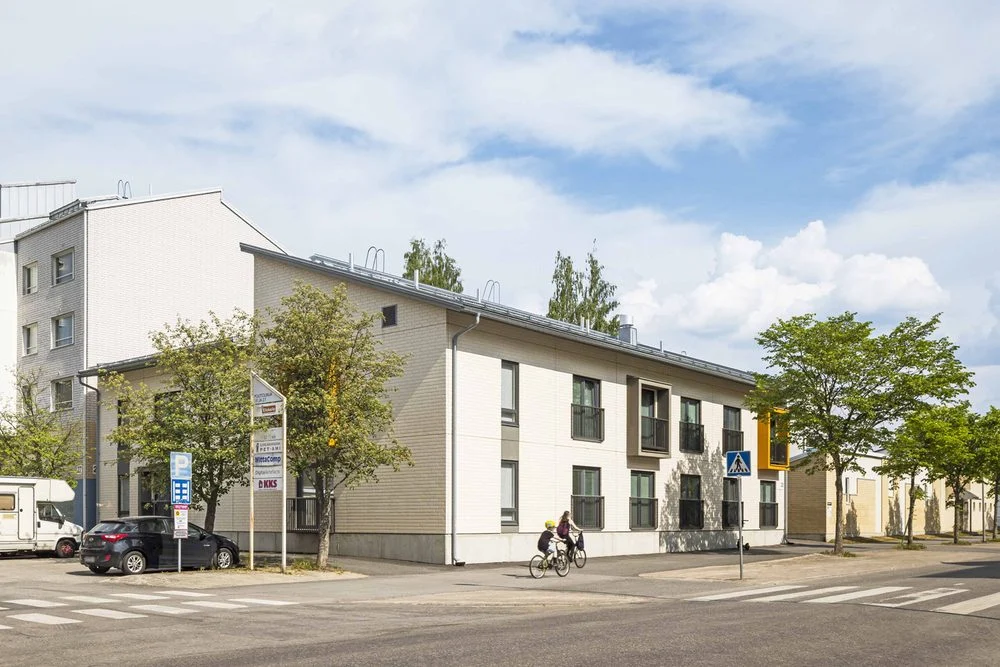
Jyväskylän Lukkari, a Samla Asunnot Ky property
Finland's rent statistics contain two different kinds of rent that are not priced the same way. One is the market-financed dwelling, whose rent is set by the market. The other is the state-subsidised ARA dwelling, whose rent covers actual costs such as the property's interest, maintenance and repairs. When the statistics say rents have risen, the figure is a blend of the two.
Until 2022 the difference did not matter. Costs were stable and both rents rose at the same pace, a little over one per cent a year on average. The difference between the two pricing methods did not show, because nothing put it to the test.
In 2023 costs rose. Interest rates turned upwards and the price of maintenance followed. In the ARA stock the increase passed straight into rents, because cost-based rent is a formula, not a negotiation. In the market it did not pass through, because an exceptionally large number of new rental dwellings were completed at the same time. With more vacant flats than tenants, there was no room for increases. The same cost shock produced two different outcomes.
How this is known
The difference between the annual change of the whole rental stock and of market-financed dwellings averaged less than 0.1 percentage points in 2016–2022. In 2023 it was 0.5, and in 2024–2025 already 1.1 percentage points.
The rent trend of the ARA stock itself is not reported separately in the statistics, but it can be derived from the difference. In 2024 ARA rents rose by roughly four per cent while market rents rose by 1.4. The figure is a calculation and depends on the share of the ARA stock in the whole, so it should be read as an order of magnitude rather than an exact number.
For an investor the relevant figure is the market rent, and its rise has stalled. In early 2026 market-financed rents rose by 0.1 per cent across the country. In the Helsinki region they fell by 0.3–0.4 per cent. In Jyväskylä they did not move at all.
A standstill is not the same as a collapse. Rents are not falling; they are staying put.
The same picture emerges from leasing work. Kaisa Teerikoski, CEO of Isännöintitalo Virtanen Oy, which manages Samla's residential properties, says the standstill is not showing up as discounts:
"Demand has been comfortable, and rents have been at the same level as in earlier leases. We have hardly had to lower rents; if anything, we have been able to round them slightly upwards. Only for a few flats in more basic condition has the asking rent had to be revised."
Samppa Lajunen, portfolio manager at Samla Capital, describes the early part of the year like this:
"In some towns we noticed leasing was sluggish early in the year. In that moment the difference between an active letting agent and a passive one stood out, and the difference in results was dramatic. I seriously wondered where the market was heading. Then it picked up after all."
The sluggishness was not spread evenly across dwelling types. According to Lajunen, in Jyväskylä it affected two-room flats most, of which an exceptionally large number were listed vacant on the Vuokraovi service. Teerikoski's experience is the same:
"Two-room flats have proved the hardest to let, especially if their condition is only satisfactory or there is otherwise plenty of supply in the area. In university towns small flats are let very quickly, and larger family flats are let in under a month."
The reason is supply: the new flats completed in 2023 and 2024 are still on the market. Once they have been let and no new production has replaced them, the room for increases returns. New construction has now been run down, so the question about rents turning upwards is one of timing, not direction.
This is also why the headline figure in the statistics is misleading right now. The whole rental stock still rose by 0.6–0.7 per cent in early 2026. That figure does not describe the market but the increased costs of the ARA stock.
How this is known
Statistics Finland revised its rent statistics during 2025 and the old series has been discontinued. Its final quarter, the end of 2025, shows a sharp drop that the replacement statistics do not contain: the old series says market rents fell by 0.8 per cent, the new one says they rose by 0.1 per cent in the same quarter. The difference appears in 14 regions out of 17, so it concerns the last observation of the whole series, not a single figure.
For that reason this article uses the old series only up to the quarter in which the two statistics still tell the same story. The most recent figures are taken from the replacement statistics.